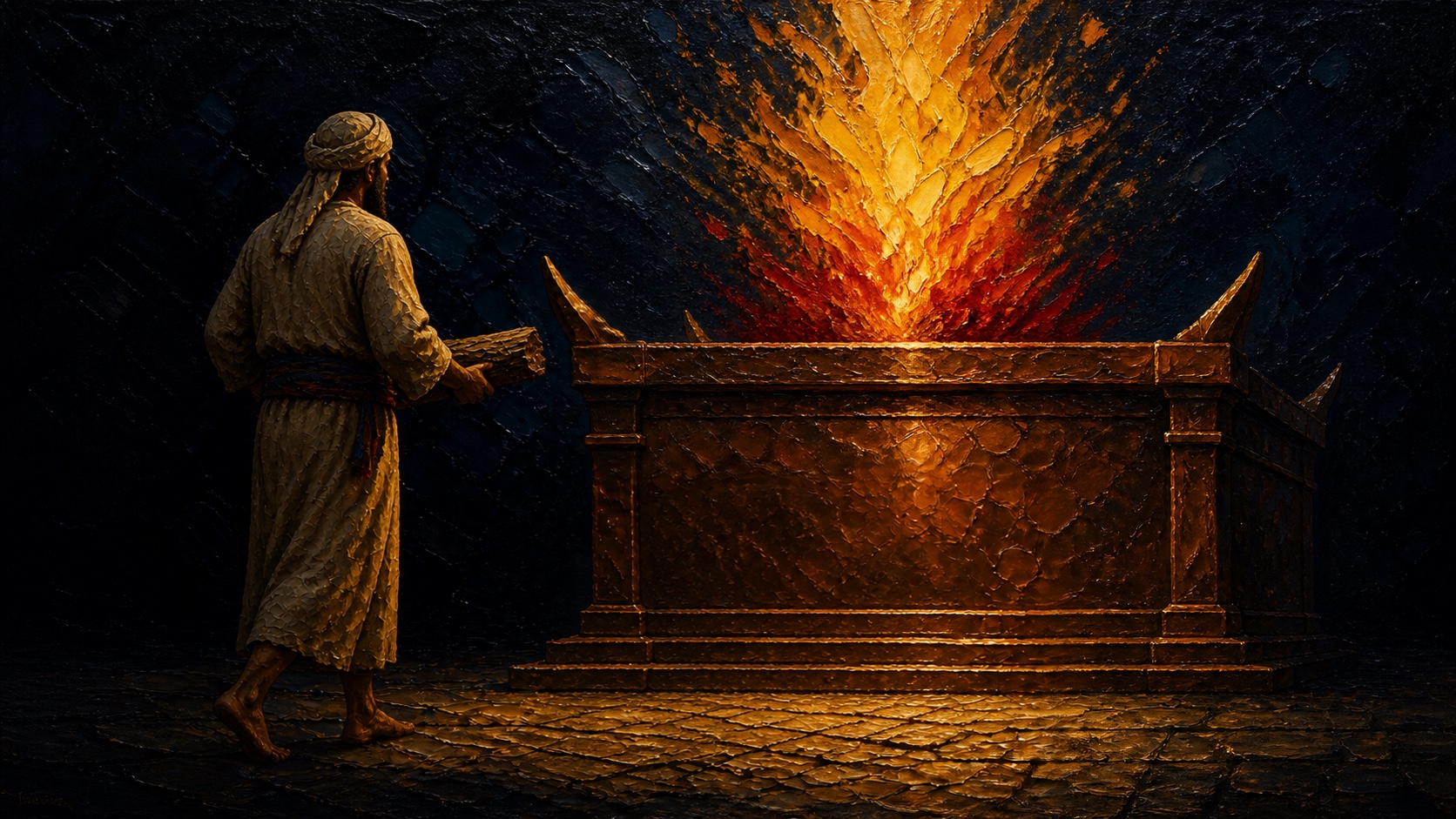
A New Word
Parashas Tzav starts with a new word. I don't mean a new word in that we haven't seen this word before. I mean new in a narrative sense. The word is צַו (tzav): command.
HaKadosh Baruch Hu speaks to Moshe and says to him, "Command Aharon and his sons." That is interesting. Last week, Hashem said to Moshe, "Have a conversation with the Jewish people about these korbanos." This week, He's telling Moshe to command Aharon about these same korbanos.
What's the difference?
Rashi:
צו — אין צו אלא לשון זירוז מיד ולדורות
Rashi on Vayikra · 6:2Tzav — tzav is nothing other than the language of urging, immediately and for all generations.
A conversation, evidently, does not have the same sense of urgency as a command. It's information, preparation for the moment when you will need to act.
A command, on the other hand, means get going right now.
And what is it that Aharon and his sons need to do right away? It has to do with fire.
צַו אֶת אַהֲרֹן וְאֶת בָּנָיו לֵאמֹר זֹאת תּוֹרַת הָעֹלָה הִוא הָעֹלָה עַל מוֹקְדָהּ עַל הַמִּזְבֵּחַ כׇּל הַלַּיְלָה עַד הַבֹּקֶר וְאֵשׁ הַמִּזְבֵּחַ תּוּקַד בּוֹ
Vayikra · 6:2Command Aharon and his sons, saying: This is the teaching of the olah — it is the olah, upon its burning place, upon the mizbeach, all the night until the morning, and the fire of the mizbeach shall be kindled on it.
The korban olah has to be put on something called a מוֹקְדָה (mokdah). Now I don't 100% know what the word mokdah means, but my (not yet) working hypothesis is that it has to do with kindling. Perhaps it's the place where the fire is kindling. Or the state of being kindled.
Not sure. The key point for us, though, is that it relates to fire.
The olah is going to be on the mokdah — on the place that's lit with fire — all night long until the morning.
Now, this is not the only reference to fire in this short little section. We are also told that אֵשׁ הַמִּזְבֵּחַ תּוּקַד בּוֹ (eish hamizbeach tukad bo) — the fire of the mizbeach will be kindled on it.
So we are connecting the fire to the mizbeach. The fire is kindled on the mizbeach, and the olah goes on that fire. It doesn't just go on the mizbeach — it specifically goes on the fire of the mizbeach.
And it's this fire — and the olah that goes on it — that Aharon (and his sons) are commanded to tend to immediately.
Fire has (once again) come to the fore.
We saw fire play a prominent role at the sneh.
We saw fire play a prominent role at Har Sinai.
And now we are seeing fire play a prominent role in the Mishkan.
But it's not just the fire that gets prime play in our parsha. It's also the ash which the fire creates:
וְלָבַשׁ הַכֹּהֵן מִדּוֹ בַד וּמִכְנְסֵי בַד יִלְבַּשׁ עַל בְּשָׂרוֹ וְהֵרִים אֶת הַדֶּשֶׁן אֲשֶׁר תֹּאכַל הָאֵשׁ אֶת הָעֹלָה עַל הַמִּזְבֵּחַ וְשָׂמוֹ אֵצֶל הַמִּזְבֵּחַ
Vayikra · 6:3The kohen shall put on his linen garment, and his linen breeches he shall put upon his flesh, and he shall lift up the deshen that the fire has consumed of the olah upon the mizbeach, and place it beside the mizbeach.
That דֶּשֶׁן (deshen), the mefarshim say, is a fatty type of ash.
Ash. That is familiar.
Remember the chet ha'eigel — Moshe ground it down until it was very fine, dust-like.
And the parah adumah was burned until it became אֵפֶר (efer) — ash (Bamidbar 19:9).
And just like the ash (אֵפֶר — efer) of the parah is taken to a מָקוֹם טָהוֹר (makom tahor — a "pure" place), so too the ash (הַדֶּשֶׁן — deshen) is taken to a pure place.
Once again, we see a connected theme. And we note that connection.
And once again, we note a variation off of that theme — efer vs deshen.
Why the difference? As always, we start with not knowing — and (bezras Hashem) work our way from there to some levels of understanding.
Today we will merely mention the deshen, without trying to figure it out. But we will leave some mental notes.
Note #1: Pay attention if (in our journey through the yam shel Torah) any clues come that indicate what this may mean.
Note #2: Try and circle back to this question some day.
With that said, let's return to the fire.
We have been waiting to find the fire. We have already noted the call and the cloud — הקרִיאָה and הענן. We saw how the cloud covered both Har Sinai and the Mishkan. And we noted that there was a call both at Har Sinai and the Mishkan (not to mention the Sneh — and elsewhere).
And so we figured that it was only a matter of time until we found the fire. And now we have. Yes, it was also mentioned last week — but now it is taking center stage.
And as we look further at this command to Aharon, we notice how much focus is placed on this fire.
Aharon is told that the fire of the mizbeach will be kindled on it (i.e., on the mizbeach):
וְאֵ֥שׁ הַמִּזְבֵּ֖חַ תּ֥וּקַד בּֽוֹ
Vayikra · 6:2And the fire of the mizbeach shall be kindled on it.
And then he is told that again.
וְהָאֵ֨שׁ עַל־הַמִּזְבֵּ֤חַ תּֽוּקַד־בּוֹ֙
Vayikra · 6:5And the fire on the mizbeach shall be kindled on it.
And then again.
אֵ֗שׁ תָּמִ֛יד תּוּקַ֥ד עַל־הַמִּזְבֵּ֖חַ
Vayikra · 6:6A perpetual fire shall be kindled on the mizbeach.
Furthermore, he is told not to extinguish that fire:
וְהָאֵ֨שׁ עַל־הַמִּזְבֵּ֤חַ תּֽוּקַד־בּוֹ֙ לֹ֣א תִכְבֶּ֔ה
Vayikra · 6:5And the fire on the mizbeach shall be kindled on it, you shall not extinguish it.
And then he is told that again:
אֵ֗שׁ תָּמִ֛יד תּוּקַ֥ד עַל־הַמִּזְבֵּ֖חַ לֹ֣א תִכְבֶּ֔ה
Vayikra · 6:6A perpetual fire shall be kindled on the mizbeach, you shall not extinguish it.
Why the repetition? We don't know. And we won't focus on it today. But we will create some mental notes.
The point is, this fire is important. Or, put otherwise, there is something about the mizbeach and fire that is of central importance.
And that is something that we will focus on today.
But first, we have to take a closer look at fire itself.