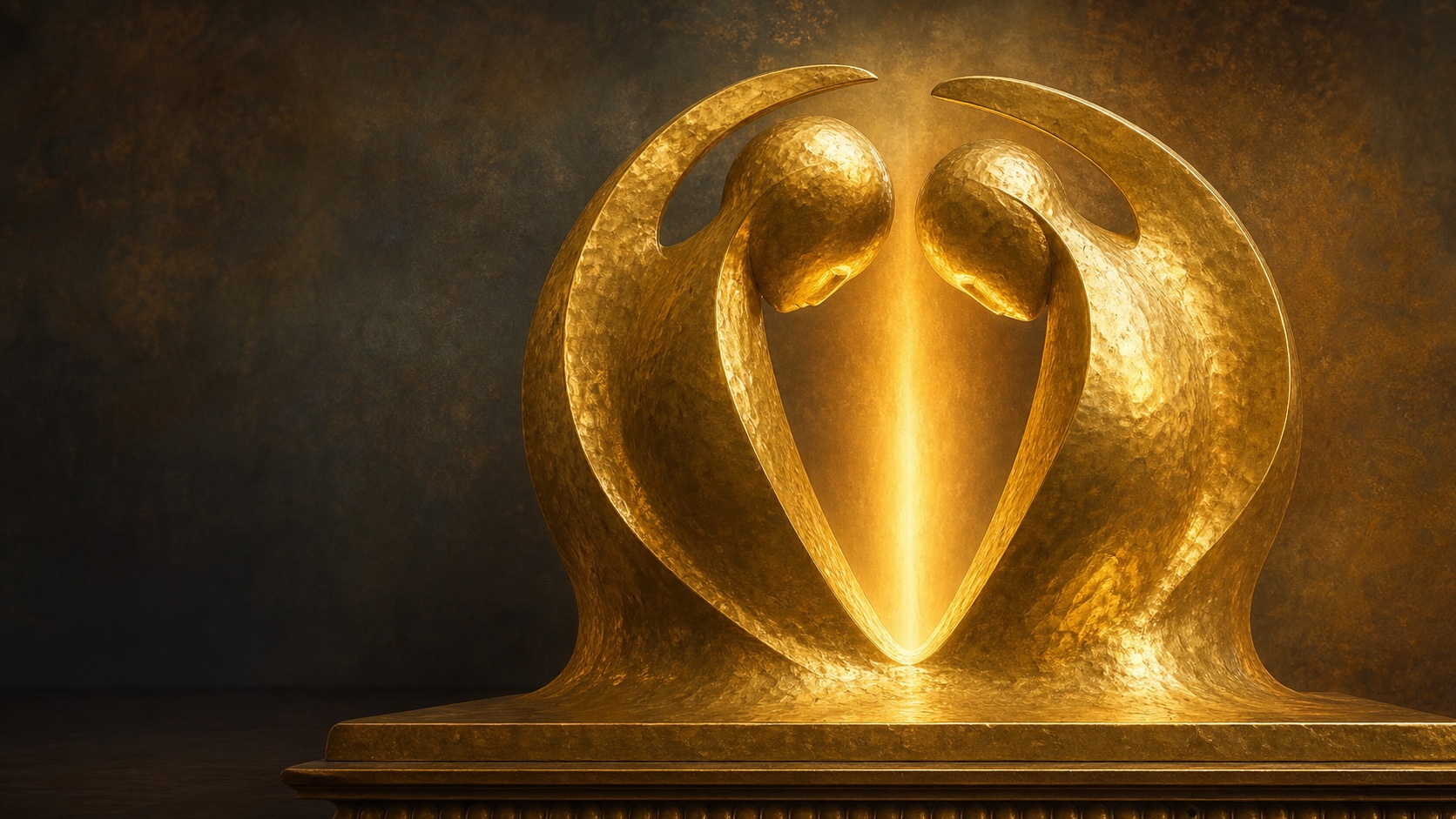
Let’s go back to the end of Parshas Mishpatim.
Moshe is about to go up to Har Sinai for forty days and forty nights. And right before he goes up, Hakadosh Baruch Hu tells him what he’s going to receive:
וַיֹּאמֶר ה׳ אֶל מֹשֶׁה עֲלֵה אֵלַי הָהָרָה וֶהְיֵה שָׁם וְאֶתְּנָה לְךָ אֶת לֻחֹת הָאֶבֶן וְהַתּוֹרָה וְהַמִּצְוָה אֲשֶׁר כָּתַבְתִּי לְהוֹרֹתָם
And Y-K-V-K said to Moshe: “Come up to Me to the mountain and stay there. And I will give you the stone tablets, the Torah, and the Mitzvah, which I wrote to instruct them.”
Three things:
The stone tablets (לֻחֹת הָאֶבֶן)
The Torah (הַתּוֹרָה)
The Mitzvah (הַמִּצְוָה)
Now, let’s pretend we don’t know anything.
We don’t know what the tablets are. We don’t know what the Torah is. We don’t know what the Mitzvah is.
Let us note — these terms aren’t explained here. Now, we obviously have a rather good idea of what the stone tablets are. But not necessarily as good an idea as what is meant by The Torah and The Mitzvah. Either way, I want to understand what these terms mean from within the experience of reading the Torah itself — not from any outside information or knowledge I may (or may not) have.
And on that front, the Chumash so far is silent. My expectation (or should I say hope) is that in the verses, chapters, and parshas to come, they will be explained.
And my expectation will be partially met. It’s the part that will not be met, though, that interests me.
But first — let’s see where things “go right” (so to speak).
Tracking the Luchos
Let’s track the Luchos HaEven — the stone tablets. It’ll take us a little while. We’re at the very end of Parshas Mishpatim, the last few pesukim of chapter 24. We’re going to have to skip over the next two parshios and plant ourselves in the second aliyah of Parshas Ki Tisa.
What happens in these two-plus parshios?
We go step by step through the different keilim of the Mishkan. We detail the structure of the Mishkan itself. The clothes of the Kohen Gadol. Who will be in charge of actually building the Mishkan.
Then, when all of that is done, Hakadosh Baruch Hu goes on a (seeming) tangent and reminds us to keep Shabbos. In other words, by all means, build the Mishkan. Just don’t violate Shabbos when doing so.
At this point, we are done. Fully done.
And then — two parshios and six chapters later — the promise is (partially) delivered. G-d gives Moshe the Luchos HaEidus — the stone tablets:
וַיִּתֵּן אֶל מֹשֶׁה כְּכַלֹּתוֹ לְדַבֵּר אִתּוֹ בְּהַר סִינַי שְׁנֵי לֻחֹת הָעֵדֻת לֻחֹת אֶבֶן כְּתֻבִים בְּאֶצְבַּע אֱלֹהִים
Shemos · 31:18And He gave to Moshe (when he finished speaking with him on Har Sinai) the two testifying tablets — stone tablets, written by the finger of G-d.
And so we have it, (part of) the moment we have been waiting for. The Luchos HaEven have been given to Moshe. Just like G-d promised.
Of course, there is more to this moment than Moshe just receiving the tablets. There is what he is supposed to do with those tablets. But for now, I have a question.
Where are the Torah and the Mitzvah?
We all know that the Luchos are wondrous — indeed, miraculous.
Written by the finger of G-d. The tablets themselves are the work of G-d. Engraved completely through — from side to side.
And we know what happens to those tablets. Moshe takes them down from the mountain and destroys them in a rage when he sees the golden calf.
In short, the Luchos get a lot of press. In terms of narrative focus, they are prominently displayed.
But the Torah and the Mitzvah?
Zip. Zilch. Nothing. Nada.
No mention. No hint. No indication.
Just silence.
What happened? G-d told Moshe that He would give him the Luchos HaEven (the stone tablets), the Torah, and the Mitzvah.
And now we have the stone tablets. But where are the Torah and the Mitzvah? What happened to them? And why the silence?
The Aron
We are now ready for Parshas Terumah.
But no longer are we simply reading the Parsha. Rather, we are searching it. We are looking within the Parsha for some hint, even a simple clue of the Torah and the Mitzvah.
The Parsha begins (as always) with its namesake. With terumot — raising up our physical possessions by voluntarily dedicating them to the building of the Mishkan.
There is a lot hidden within this little section. But for now, we are going to skip over the opening and move on to the list of vessels that are to be built for the Mishkan.
First on the list, the Aron.
וְעָשׂוּ אֲרוֹן עֲצֵי שִׁטִּים
Shemos · 25:10And they shall make an Aron of shittim wood.
Now this sounds promising. They’re going to build an Aron. And what’s going to be in that Aron?
Well, for one thing, the Torah — as we find out at the end of Sefer Devarim:
וַיְצַ֤ו מֹשֶׁה֙ אֶת־הַלְוִיִּ֔ם נֹ֥שְׂאֵ֛י אֲר֥וֹן בְּרִית־יְהֹוָ֖ה לֵאמֹֽר׃ לָקֹ֗חַ אֵ֣ת סֵ֤פֶר הַתּוֹרָה֙ הַזֶּ֔ה וְשַׂמְתֶּ֣ם אֹת֔וֹ מִצַּ֛ד אֲר֥וֹן בְּרִית־יְהֹוָ֖ה אֱלֹהֵיכֶ֑ם וְהָיָה־שָׁ֥ם בְּךָ֖ לְעֵֽד׃
Devarim · 31:25-26And Moshe commanded the Levi’im, the carriers of the Aron of the Covenant of Y-K-V-K, saying: “Take this book of the Torah and place it from the side of the Aron of the Covenant of Y-K-V-K, your G-d. And it shall be there with you for a witness.”
That is quite interesting.
The Torah will be either on the side of the Aron HaKadosh or placed inside the Aron HaKadosh — alongside one of the walls.
Is this what was meant by “I’m going to give you the Torah and the Mitzvah”? Namely, I’m going to give you an Aron to house the Torah and the Mitzvah?
Perhaps, but it doesn’t sound quite right to me.
If I said to you, “I’m going to give you a beautiful set of jewelry.” If I show up with beautiful boxes — boxes for earrings, for bracelets, for necklaces — and they’re all empty — how impressed would you be?
“Just what I wanted! Beautiful boxes! I can’t wait to put my jewelry in there!”
The boxes, no matter how ornate they are, no matter how well-crafted — they are not the jewels that go inside them.
So it can’t be that the Aron in and of itself is the Torah and the Mitzvah that G-d promised to give Moshe. The Aron is the container. The Torah and the Mitzvah are the contents.
But perhaps it’s not that simple.